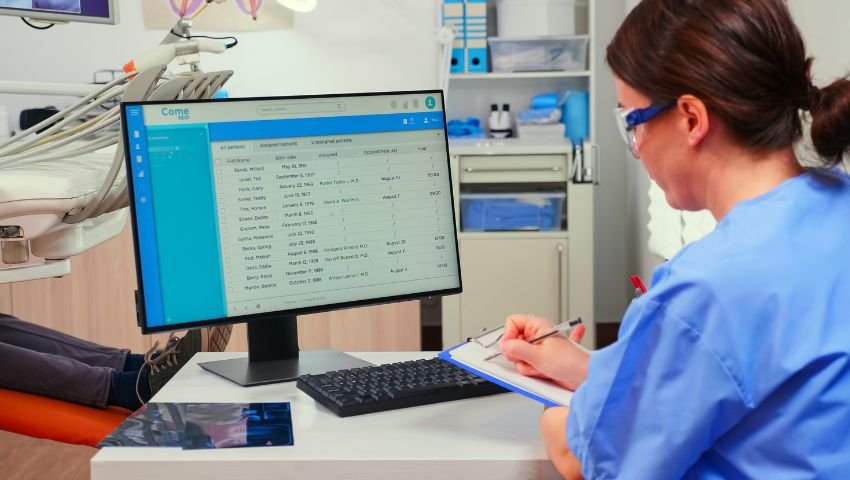
An electronic medical record is the digital version of a clinic's patient chart, holding history, notes, results and prescriptions in one place. An EMR covers records inside one organization. An EHR reaches across care settings. The distinction matters when a clinic is choosing which one it actually needs.
Healthcare is going digital and Electronic Medical Records (EMRs) are at the core of this transformation. EMRs help clinics move beyond paper files by organizing, storing and managing patient information in a secure and accessible format. But what exactly are EMRs and why are they so important?
This guide breaks it down in simple terms so you can understand how EMRs work and how they benefit both providers and patients.
Electronic Medical Records are digital versions of the paper charts found in a clinician’s office. They contain the medical and treatment history of patients within one practice or clinic and are used by healthcare providers to record:
Diagnoses and conditions
Medications and prescriptions
Treatment plans
Test results
Immunization records
Appointment history
Unlike paper charts, EMRs are searchable, organized and easier to update.
Modern EMR systems come equipped with powerful features that streamline clinical operations:
Patient demographics and medical history
Clinical notes and treatment plans
Lab and imaging integration
E-prescriptions and medication tracking
Appointment scheduling
Billing and insurance support
Role-based access control and audit trails
For Clinics:
Improved documentation accuracy
Faster access to patient records
Easier compliance with regulations
Better internal communication
Reduced paperwork and admin time
For Patients:
Consistent care and fewer errors
Secure access to health history
Easier referrals and follow-ups
Shorter wait times
Improved transparency in care
While the terms EMR and EHR are often used interchangeably, they aren’t exactly the same:
| Feature | EMR | EHR |
|---|---|---|
| Scope | Within one clinic | Across multiple providers/clinics |
| Data Sharing | Limited | Interoperable with other systems |
| Use Case | Internal patient care | Collaborative care, referrals |
| Portability | Less portable | Designed for broader care coordination |
An effective EMR doesn’t just store data, it actively enhances clinical workflows. Here’s how:
Automated alerts and reminders for follow-ups or critical care
Standardized templates for faster documentation
Decision support tools that help with diagnosis and treatment planning
Real-time access to patient history during appointments
Improved billing accuracy through integrated coding tools
Despite the benefits, EMR adoption can come with hurdles:
Staff resistance to new systems
Training and learning curves
Upfront costs for software and hardware
Integration issues with labs, pharmacies, and external tools
Data migration concerns from old systems
Most of these can be addressed through proper planning, training and vendor support.
When selecting an EMR, clinics should consider:
Specialty-specific features (e.g., fertility, pediatrics, dermatology)
User-friendly interface
Data security and compliance with HIPAA/GDPR
Scalability for growing practices
Customizable templates and workflows
Responsive support and training
Electronic Medical Records are no longer a luxury, they’re a necessity for modern healthcare delivery. From improving efficiency to enhancing patient safety, EMRs offer real value for clinics of all sizes. The key is choosing a system tailored to your practice’s needs and making the most of its features.
If you’re seeking a reliable, intuitive EMR solution built for modern fertility practices, Vitrify offers a secure, integrated IVF software that simplifies care delivery, tracks treatments and improves operational efficiency, while staying compliant and connected.
| 20 - 50 License | 50 - 100 License | 100+ License |
|---|---|---|
| Perfect for growing clinics needing flexible, scalable IVF management and secure operations. | Ideal for mid-sized clinics managing high patient volumes with seamless efficiency and care. | Built for large clinics demanding powerful, enterprise-level IVF solutions and complete scalability. |
| $19.99 Month/License $219.99 Year/License | $17.99 Month/License $197.99 Year/License | $15.99 Month/License $175.99 Year/License |
| ✔ Appointment Scheduling | ✔ Appointment Scheduling | ✔ Appointment Scheduling |
| ✔ Couple Registration | ✔ Couple Registration | ✔ Couple Registration |
| ✔ Patient Records Management | ✔ Patient Records Management | ✔ Patient Records Management |
| ✔ Basic Reporting | ✔ Basic Reporting | ✔ Basic Reporting |
| ✔ Basic Invoicing | ✔ Basic Invoicing | ✔ Basic Invoicing |
| ✔ Email Reminders | ✔ Email Reminders | ✔ Email Reminders |
| ✔ SMS Reminders* | ✔ SMS Reminders* | ✔ SMS Reminders* |
| ✔ WhatsApp Reminders* | ✔ WhatsApp Reminders* | ✔ WhatsApp Reminders* |
| ✔ Essential Support | ✔ Essential Support | ✔ Essential Support |
| ✔ MIS Reporting | ✔ MIS Reporting | ✔ MIS Reporting |
| ✔ IVF Medical Record Management | ✔ IVF Medical Record Management | ✔ IVF Medical Record Management |
| ✔ ART Cycle Management | ✔ ART Cycle Management | ✔ ART Cycle Management |
| ✔ IVF Procedure Recording | ✔ IVF Procedure Recording | ✔ IVF Procedure Recording |
| ✔ Basic Billing | ✔ Basic Billing | ✔ Basic Billing |
| ✔ Limited Data Export (PDF) | ✔ Limited Data Export (PDF) | ✔ Limited Data Export (PDF) |
Yes, most modern EMRs are cloud-based and accessible with secure logins from authorized devices.
EMR systems use encryption, access controls and audit logs to protect sensitive patient information.
Absolutely. Most EMRs are built to integrate with external systems like labs and diagnostic tools.
Implementation time varies based on clinic size and existing systems. It can range from a few weeks to several months.
Look for EMR vendors that offer hands-on training, onboarding and ongoing support to ensure a smooth transition.